Mastering STEM Communication: How a Technical E-Learning Presentation Template Transforms Complex Topics into Clear Visual Stories
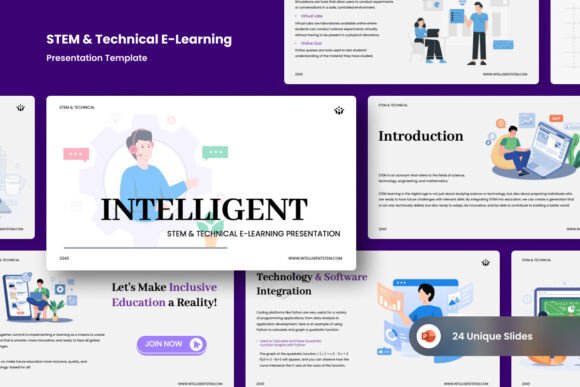
In today's fast-paced digital landscape, the ability to explain scientific, technological, engineering, and mathematical concepts clearly is more valuable than ever. Whether you're an educator preparing a virtual lesson, a researcher presenting data, or a corporate trainer onboarding technical teams, the way you deliver content can make or break understanding. This is where a STEM technical e-learning presentation designed with a clean, modern, and minimalist approach becomes a game-changer. Such a template does more than just display information—it structures it, visualizes it, and makes it accessible for a wide range of learners. In this article, we'll explore what makes these presentation tools essential, how they work in practice, and how you can use them to elevate your own technical communication.
The Core Challenge of Teaching STEM Subjects
STEM fields are inherently dense. Concepts like molecular structures, circuit diagrams, statistical distributions, and algorithmic logic require precise explanation. Without visual support, learners can quickly become overwhelmed. A wall of text or a cluttered slide does not foster comprehension—it creates confusion. The purpose of a professional presentation template built for STEM content is to bridge the gap between complexity and clarity. It provides a structured framework that guides both the presenter and the audience through layered information without losing focus on the big picture.
Moreover, the audience for STEM education is diverse. Beginners may need foundational explanations, while advanced learners look for data-heavy insights. A well-designed presentation template accommodates both by offering flexible layouts, editable infographics, and scalable visuals. This adaptability is crucial in modern e-learning environments where one-size-fits-all approaches rarely work.
What Sets a High-Quality STEM Presentation Template Apart
Not all slide decks are created equal. A generic presentation might work for a business update, but technical subjects demand specialized design features. Let's break down the key characteristics of a superior STEM technical e-learning presentation template.
Clean and Minimalist Design That Reduces Cognitive Load
A minimalist aesthetic isn't just about looking modern—it's about optimizing the brain's ability to process information. When slides are clean, with ample white space and a restrained color palette, learners can focus on what actually matters: the content. A professional color scheme, often featuring cool blues, greens, or neutral tones, aligns with the analytical nature of STEM subjects. This visual restraint prevents distraction and helps maintain attention during long or complex sessions. By using a template built on master slides, you ensure consistent typography, spacing, and alignment throughout your entire presentation, which builds professional credibility and reduces visual noise.
High-Quality Visuals and Data Visualizations
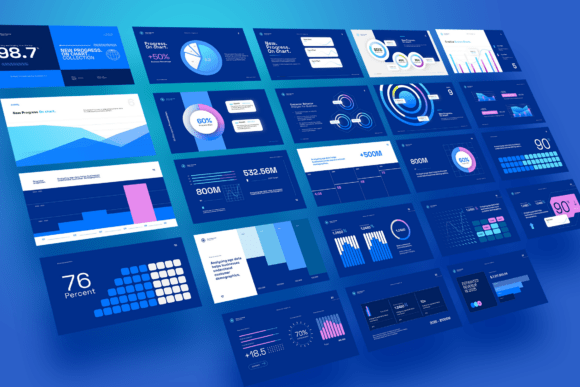
Numbers and processes come alive when they are visualized. The best templates include editable infographics, charts, graphs, and icons that represent scientific and technical topics. Instead of pasting a static image of a bar chart, you can customize the data points, colors, and labels directly within the slide. This makes it possible to update your presentation for different datasets without starting from scratch. Icons representing laboratory equipment, network nodes, DNA strands, or mathematical symbols add immediate context. When learners see a recognizable icon next to a concept, they form quicker mental associations, accelerating comprehension.
Full Customizability and Scalability
One of the most practical features of a modern template is that all slide designs, graphics, and elements are resizable and editable. You are not locked into a rigid layout. If you need to emphasize a particular point, you can enlarge an infographic. If you are short on space, you can rearrange elements. The template should come with picture placeholders that allow you to drag and drop your own images, ensuring that your brand or unique content is seamlessly integrated. This flexibility is especially important when presenting specialized STEM data that doesn't fit neatly into predefined boxes. Templates that are compatible with PowerPoint (PPTX, PDF) and that use recommended free web fonts give you further freedom to tailor the look without worrying about licensing issues.
Building an Effective E-Learning Presentation from the Ground Up
Now that we understand the features, let's walk through how to use such a template to build a compelling educational session. The process is rooted in instructional design principles but made accessible through ready-made assets.
Start with a Clear Narrative Arc
Every great presentation tells a story. For a STEM topic, your narrative might follow a problem-solution structure, a historical progression, or a step-by-step breakdown of a process. Use your title slide to set the stage, then move through sections that build upon one another. The template's structure—based on 16:9 widescreen ratio—gives you a cinematic canvas that feels natural for digital screens, whether viewed on a monitor, projector, or tablet.
Leverage Editable Infographics for Complex Data
Instead of explaining a concept like photosynthesis or a cybersecurity protocol in dense text, use an infographic to map out each stage. With an editable template, you can adjust the flow, colors, and labels to match your specific lesson. For example, if you are teaching Newton's laws, you might use an infographic showing force vectors, mass, and acceleration. Learners can visually trace the relationship between variables before diving into formulas. This approach appeals to both visual and analytical learning styles.
Use Data Visualizations to Support Arguments
STEM fields rely on evidence. When presenting research findings or experimental results, include editable graphs that you can populate with real data. Whether it's a line graph showing temperature changes over time or a bar chart comparing chemical yields, seeing the numbers visually helps the audience grasp trends and outliers quickly. The template's built-in visualizations save you hours of manual chart creation and ensure that your data is always presented in a clean, professional manner.
Incorporate Icons for Quick Recognition
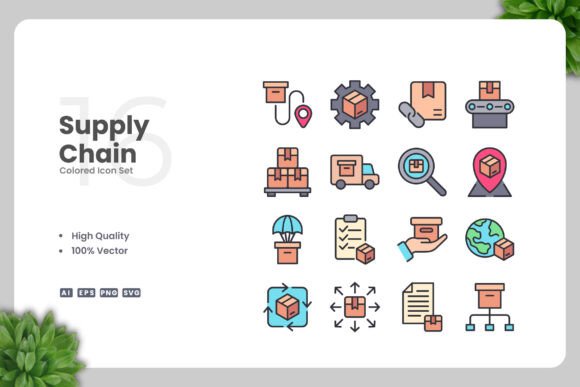
Icons act as visual shorthand. In a slide explaining machine learning algorithms, a small icon of a neural network node next to the term "deep learning" reinforces the concept. The template includes icons representing scientific and technical topics, so you don't need to search for them online. This consistency in visual language improves retention and makes the presentation feel cohesive.
Practical Applications Across Modern Life and Work
A STEM e-learning presentation is not confined to classrooms. Its utility extends into many areas of modern life and business.
Corporate Training: Technical teams often need to learn new software, safety protocols, or engineering standards. A structured presentation template simplifies onboarding and ensures that all team members receive the same high-quality information. For example, a presentation on cybersecurity risks can use flowcharts and threat matrices to show attack vectors and mitigation steps.
Academic Research: When presenting a thesis or journal article at a conference, researchers can use the template to present their methodology, data, and conclusions clearly. The professional design conveys authority and helps the audience follow along even with complex statistical analysis.
Healthcare Education: Medical trainers can explain biological processes or treatment protocols using the template's infographics and icons. For instance, a slide showing the mechanism of action of a vaccine becomes much more understandable when paired with a visual pathway of immune response.
Public Outreach: Science communicators and museums can use the template to create accessible content for general audiences. By simplifying without dumbing down, they can spark curiosity and increase STEM literacy among the public.
Common Misunderstandings About Presentation Templates
Some people assume that using a template limits creativity or forces content into a generic mold. In reality, a well-designed template provides a foundation, not a cage. The best templates are fully customizable, meaning you can change colors, fonts, layouts, and element positions. Another misconception is that you need advanced design skills to make a template look good. Modern templates come with intuitive placeholders and master slides that automatically maintain alignment and consistency—even if you have never used PowerPoint or similar software before. You simply drag and drop your content, and the template takes care of the visual heavy lifting.
Choosing the Right Template for Your Needs
When selecting a STEM presentation template, consider the following factors:
- File compatibility: Ensure the template works with your preferred software (PPTX, PDF, Google Slides).
- Graphic scalability: All graphics should be resizable and editable without losing quality.
- Font licensing: Use templates that recommend free web fonts to avoid extra costs.
- Picture placeholders: These make it easy to swap in your own images without breaking the design.
- Master slide structure: This feature saves time by applying consistent formatting across all slides.
A template that meets these criteria will serve you for years, whether you are creating a one-time lecture or an entire e-learning curriculum.
Bringing It All Together: From Template to Transformative Learning
The ultimate goal of any STEM technical e-learning presentation is not just to show slides but to facilitate understanding. A thoughtfully designed template removes the friction between the presenter and the audience. It allows the educator to focus on explanation and engagement rather than wrestling with formatting issues. For the learner, it reduces cognitive overload and provides visual anchors that make abstract concepts tangible.
Imagine a classroom—physical or virtual—where every slide supports the narrative, every graph tells a story, and every icon reinforces a key term. That is the power of a modern STEM presentation template. It is a tool that respects both the complexity of the subject and the humanity of the learner.
Conclusion
Communicating technical knowledge effectively is one of the most important skills in the 21st century. Whether you are teaching robotics, climate science, or algebraic geometry, the way you present your material can determine how well it is received and retained. A STEM technical e-learning presentation template built with a clean, minimalist, and futuristic design gives you the structure you need to focus on what matters: the content. With editable infographics, data visualizations, and icons, you can translate complex ideas into clear visuals that engage and educate. By choosing a template that is fully customizable, compatible with your tools, and easy to use, you empower yourself to deliver presentations that are both professional and impactful. In a world where understanding STEM is increasingly essential, the right template is not a luxury—it is a necessity.