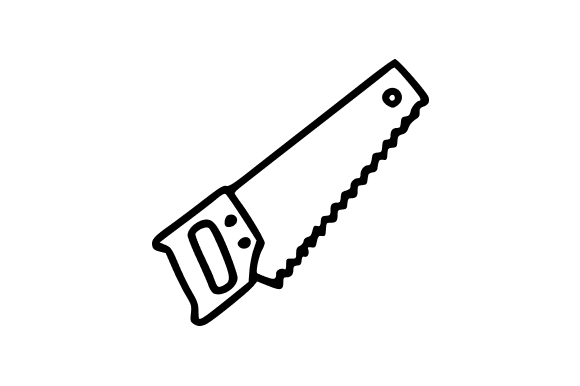
The Utility and Aesthetic of a Sketch of a Hand Saw Line Art in Modern Design
Selecting the right visual asset is a critical decision for any designer, marketer, or content creator evaluating their toolkit. It is not just about what the image depicts, but what it communicates and how flexibly it can be deployed across different media. A sketch of a hand saw line art offers a unique intersection of practicality and artistic expression. It moves beyond the literal representation of a tool to suggest craftsmanship, manual labor, precision, and a handcrafted ethos. For professionals deliberating over resources for branding, editorial content, or promotional materials, understanding the distinct advantages of this format compared to standard photographs or generic clip art is essential. This article provides a balanced examination of where this type of illustration excels, where it may fall short, and how it strategically fits into a broader landscape of visual resources.
What Makes This Type of Line Art Distinct?
The core distinction of a sketch of a hand saw line art lies in its inherent aesthetic and technical construction. Line art, by nature, simplifies complex forms by emphasizing outlines, contours, and negative space. This simplification is a strength, not a limitation. It makes the image exceptionally legible in small sizes, such as an app icon or a sticker, while remaining visually powerful at large scales, like a poster or trade show banner, because it does not rely on pixel-level detail. The vector formats, specifically SVG and EPS, ensure that this clarity scales infinitely without degradation or loss of fidelity.
The "sketch" quality adds a layer of conceptual weight. It carries a connotation of ideation, authenticity, and the human hand. In a market saturated with hyper-realistic 3D renders and polished stock photography, a hand-drawn line art sketch can feel refreshingly direct and honest. This makes it a powerful tool for brands that want to emphasize tradition, quality, and a hands-on approach.
Another distinct advantage is the file format package. The inclusion of SVG, EPS, JPG, and Transparent PNG covers nearly every practical use case a professional might encounter. The SVG format is ideal for responsive web design, allowing crisp graphics on retina displays. The EPS file integrates seamlessly into professional software like Adobe Illustrator or CorelDRAW for high-end print publications. The high-resolution JPG works for quick mock-ups or inclusions in documents, and the Transparent PNG is invaluable for overlaying the sketch onto textured backgrounds, photographs, or colored sections of a layout without a distracting white box. This comprehensive format offering transforms a single illustration into a truly modular design asset.
Evaluating the Alternatives: Photographs, Icons, and Custom Commissions
When considering an image of a hand saw for a project, professionals typically weigh several standard options: stock photography, vector icons, and commissioned artwork. Each carries distinct tradeoffs.
Stock Photography
Strengths include high detail, realistic textures, and contextual settings. A photo can show the saw cutting through wood, with dust and lighting that tells a complete story instantly. However, limitations include fixed aspect ratios, resolution caps, and inherent stylistic elements like lighting or color temperature that are difficult to alter. Photographs often require careful masking or background removal to integrate cleanly into a layout. A sketch of a hand saw line art avoids these integration challenges entirely, offering a clean, stand-alone vector that can be placed anywhere.
Best fit for photography: E-commerce product listings, editorial features requiring a specific real-world context, or comparative reviews where the actual appearance of a tool matters.
Standard Vector Icons
Strengths include extreme cleanliness, universal scalability, and ease of use in UI design or infographic labels. They are designed for rapid comprehension. However, limitations often include a lack of character and detail. A simple silhouette of a saw may not carry the emotional or thematic weight required for a presentation hero image or a brand's primary logo element. A dedicated sketch of a hand saw line art bridges this gap, providing the clarity and scalability of an icon while retaining the visual interest and detail of a full illustration.
Best fit for icons: Navigation menus, wayfinding systems, functional diagrams, and UI components where simplicity is paramount.
Commissioned Custom Artwork
Strengths are clear: perfect alignment with brand identity, complete originality, and custom-tailored composition. However, the limitations are significant for many. Custom line art requires time to brief, rough out, refine, and finalize. It also requires a budget for a professional illustrator’s time, which can be prohibitive for small businesses or projects with tight turnaround times.
Best fit for custom work: Major brand campaigns with substantial budgets, one-off flagship projects, or highly specific concepts that cannot be addressed by existing assets.
The sketch of a hand saw line art sits neatly in the middle of these alternatives. It provides the artistic quality and adaptability of custom work without the wait time or per-hour cost. It offers more character and detail than a basic icon while eliminating the integration challenges of a photograph. This makes it a highly efficient and strategic choice for many professional scenarios.
When the Line Art Asset Is the Right Choice
The decision to use a line art illustration should be driven by the specific requirements of the project. There are several scenarios where a sketch of a hand saw line art is not just a good option, but arguably the optimal one.
- Print Projects with an Artisanal Bent: For T-shirt designs, posters for craft fairs, or packaging for hand tools, the hand-drawn quality of the line art is ideal. It communicates authenticity and a connection to the craft. The EPS format ensures the print shop receives a clean, high-resolution vector file.
- Digital Overlays and Compositing: The transparent PNG format is exceptionally valuable here. If you are building an infographic about woodworking safety, you can place the line art of the saw over a distressed wood texture or a blueprint background. This creates a rich, layered visual that would be difficult to achieve with a photograph without extensive masking and color correction.
- Educational and Instructional Content: In a manual or an infographic, clarity is paramount. A photograph of a saw might have shadows obscuring the gullets of the teeth. A sketch of a hand saw line art provides a clean, labeled diagram instantly. The line art can be easily recolored or broken into parts in vector software for detailed step-by-step instructions.
- Brand Consistency Across Media: The SVG format allows the same high-quality asset to be used on a website, scaled down for a social media avatar, and blown up for a banner. This consistency in visual quality reinforces brand professionalism.
Recognizing Limitations and Exploring Other Approaches
Despite its versatility, a line art sketch is not a universal solution. Understanding its limitations is crucial for making a fully informed decision.
Lack of Realism: If the goal is to showcase a specific product model or to convey the texture of worn metal and wood, a photograph or a detailed 3D render is necessary. The abstraction inherent in line art cannot replicate the tactile cues of photorealistic materials. In contexts like industrial machinery specifications or high-end product showcases, realism often trumps aesthetic style.
Perception and Tone: It is worth considering the audience's expectations. In a corporate boardroom presentation focused on cutting-edge manufacturing technology, a sleek, polished 3D render might instill more confidence than a hand-drawn sketch. The "sketch" aesthetic implies an early stage of creation or a focus on heritage. While this is a strength for artisanal brands, it could be a mismatch for a brand emphasizing hyper-modern innovation. You need to align the visual tone of the asset with the emotional tone of the message.
Composition Specificity: A single illustration captures one specific angle and composition. A full-body side view of a saw is excellent for general use, but if your article focuses solely on the handle ergonomics or the tooth geometry, a close-up or a specialized diagram drawn specifically for that purpose will be more effective. A pre-made asset is a resource, but it cannot cover every specialized angle like a custom illustration or a multi-shot photo set can.
Technical Granularity: While vectors are smooth, the quality of the original artwork matters. Prospective buyers should examine the vector paths and line weights. Are the lines consistent? Is the detail level appropriate for their intended use? A high-quality asset should have clean, well-constructed paths that edit easily. This is a mark of professional-grade E-E-A-T (Expertise, Authoritativeness, and Trustworthiness) in the asset itself.
Practical Advice for the Design Professional
When evaluating a sketch of a hand saw line art, treat it as a strategic component of a larger visual system. Ask yourself the following questions to determine if this is the right resource:
- What is the primary context? Web, print, video, or physical merchandise?
- What is the intended feeling? Heritage and craft, or precision and technology? The line art strongly supports the former.
- What are the technical constraints? Need for scalability (SVG/EPS is best), need for transparency (PNG is key), need for compatibility with specific software (EPS is universal for print).
- What is the budget for time and money? If you need a high-quality visual immediately without booking a freelancer, a premium line art asset is a highly cost-effective solution. It fills the gap between free, low-quality clip art and expensive, time-consuming custom work.
Making an Informed Choice
Effective visual communication relies on aligning the medium, the message, and the audience. A sketch of a hand saw line art is a well-defined tool in the designer's kit. It offers a powerful combination of aesthetic appeal, technical flexibility, and thematic resonance that is difficult to achieve with other standard asset types.
For projects where you need to evoke craftsmanship, ensure crisp legibility across multiple formats, and maintain professional quality without the overhead of a custom commission, this type of vector illustration is a standout choice. It provides the clarity of an icon, the character of a sketch, and the versatility required by modern multi-platform design workflows.
By carefully weighing these factors against the realistic limitations and considering the alternatives, you can select the visual resource that best serves the goals of your specific project. When the situation calls for an image that balances artistic expression with practical utility, a high-quality line art asset delivers reliable, professional results. Make your selection based on the project's core needs, and you will find that the right visual resource elevates your entire piece without forcing a compromise between quality, cost, and time. It is a decision that supports both creative excellence and practical workflow efficiency.