Outline Japanese Pagoda Building: A Versatile Design Asset for Professional Projects
When you need a clean, recognizable architectural motif for a design project, an outline illustration of a Japanese pagoda offers immediate visual impact. This specific asset delivers just that: a stylized, scalable vector drawing of a traditional Japanese pagoda building, optimized for a wide range of creative uses. Whether you are preparing marketing materials, building a website, or producing educational content, this illustration provides a reliable foundation that can be adapted without losing clarity or resolution.
What the Outline Japanese Pagoda Building Offers
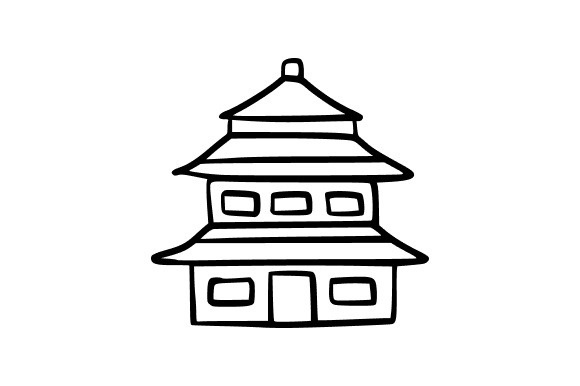
At its core, this asset is a line-art representation of a Japanese pagoda, the tiered tower structure common in East Asian temple architecture. The illustration focuses on clean outlines and recognizable silhouette features: the curved eaves, stacked levels, and the distinctive spire at the top. It does not attempt photorealism or heavy shading, which is exactly what makes it useful for modern design work. The minimal style ensures it integrates smoothly into layouts where detailed photography might feel heavy or distracting.
The package includes four file formats: SVG, EPS, JPG, and transparent PNG. SVG and EPS are vector formats, meaning they can be scaled to any size without pixelation or loss of edge sharpness. The JPG provides a high-resolution raster version for quick placement, while the transparent PNG is already isolated on a clear background, saving time when compositing the image over other elements. This range of formats covers virtually every standard workflow, from print production to web development to presentation software.
Key Characteristics and Strengths
The primary strength of this illustration is its adaptability. Because the design is an outline, it can be recolored, resized, and placed over backgrounds of any complexity. You are not locked into a specific color palette. The outline style also works well for monochrome projects, screen printing, or situations where you need a consistent visual language across different media.
Another notable characteristic is the proportion and balance of the pagoda shape. The tiers are clearly defined, and the overall structure reads instantly as a Japanese pagoda, even at small sizes. This is important for thumbnails, icons, or branding elements where detail must remain legible. The line weight appears consistent, which helps maintain a cohesive look when used alongside other outline-style icons or illustrations.
File Quality and Technical Reliability
Vector files in the SVG and EPS formats are well-structured and compatible with major design applications such as Adobe Illustrator, Affinity Designer, Inkscape, and CorelDRAW. The SVG file is particularly useful for web development because it can be embedded directly into HTML and styled with CSS. The EPS file retains editing flexibility for professional print workflows. The JPG and PNG files are delivered at a resolution that works for both screen display and moderate print sizes, though for large-format printing you would rely on the vector versions.
The transparent PNG is a practical addition. If you need to drop the pagoda into a presentation slide, social media graphic, or email header without opening a design application, the PNG is ready to use. The transparency is clean, with no visible halos or rough edges around the outline.
Real-World Applications and Use Cases
This illustration is not limited to one type of project. Here are several scenarios where it performs well:
- Web and UI design: Use the SVG version as a navigation icon, a section divider, or a thematic accent on a travel or culture website. The lightweight vector format keeps page load times low.
- Print materials: Brochures, posters, flyers, and menu covers can incorporate the pagoda as a standalone graphic or as part of a larger layout. Because it is vector, it scales perfectly for large posters or small business cards.
- Presentations and infographics: The outline style fits naturally into slide decks where clean, minimal visuals support the message. It can be used to illustrate historical or cultural topics, or as a metaphor for structure and stability.
- Stickers and merchandise: The simple line art is suitable for vinyl cut stickers, screen-printed apparel, or engraved products. The lack of fine detail means production outcomes are predictable.
- Educational content: Teachers, bloggers, and textbook designers can use the illustration to explain architectural features without visual clutter. The transparency of the PNG allows it to be placed directly over colored backgrounds or maps.
Usability and Flexibility in Practice
From a workflow perspective, this asset integrates with minimal friction. The files are organized, named clearly, and ready to import. Designers will appreciate having both editable vector formats and ready-to-use raster versions. If you work in a team, providing the SVG or EPS to a colleague means they can adjust the line color, stroke weight, or scale without degrading quality.
One practical recommendation: if you plan to use the illustration in multiple contexts, start with the SVG or EPS file. Apply a uniform stroke color that matches your brand palette, and save a copy for reuse. For web use, optimize the SVG by removing unnecessary metadata if you are concerned about file size, though for a single outline illustration the size is already modest.
Consistency Across Projects
Because the illustration is a single, well-crafted outline, it maintains visual consistency whether you use it on a business card or a billboard. This kind of consistency is valuable for building recognizable branding or thematic continuity across a campaign. The asset does not introduce unexpected variations in line style or proportion.
Who Benefits Most from This Asset
This illustration is not niche. It serves a broad range of professionals, but certain groups will find it particularly useful:
- Graphic designers and illustrators who need a reliable base element to incorporate into larger compositions or themed projects. The vector format allows endless customization.
- Marketers and small business owners who want to add cultural or architectural imagery to their materials without hiring a custom illustrator or dealing with licensing issues.
- Content creators and bloggers covering topics like travel, architecture, history, or Japanese culture. The transparent PNG is especially convenient for quick social media posts.
- Educators and publishers producing worksheets, slides, or reference guides. The clean outline prints well in black and white or color.
- Freelancers and entrepreneurs who juggle multiple roles and need a versatile visual asset that requires no editing skills to use immediately.
Possible Limitations and Considerations
No asset is perfect for every situation. This illustration is an outline, not a full-color rendering. If your project requires photorealistic detail, rich textures, or architectural precision, a line-art vector will not meet that need. The illustration also represents a generic pagoda form rather than a specific historical building. For academic or documentary work that demands accuracy to a particular structure, you would need a different source.
Additionally, because the asset is a single illustration, it may need to be paired with other visual elements to create a complete composition. It works best as an accent, icon, or motif rather than as the sole visual in a layout. Designers looking for a full scene or complex background should consider combining this asset with other outline elements or textures.
Finally, while the vector files are well-made, the line style may not suit every brand aesthetic. If your brand uses heavy textures, gradients, or photographic imagery, a flat outline may feel disconnected. In such cases, you can adjust the stroke color, add a fill, or combine the illustration with other graphical treatments to align it with your visual identity.
Long-Term Value and Practical Recommendation
Over time, having a library of clean, adaptable vector assets saves production hours and maintains visual cohesion. This pagoda illustration fits that category. Once downloaded, it can be used across unlimited projects, making it a cost-effective addition to a resource collection. The formats are current industry standards, so the files will remain usable for years without obsolescence.
For anyone working on materials related to Japanese culture, travel, architecture, or minimalist design, this asset is a practical choice. It reduces the time spent searching for appropriate imagery, and it avoids the inconsistent quality often found in free clip art. The combination of vector flexibility and ready-to-use raster files means you can move from download to deployment quickly.
If you are designing a travel brochure, building a cultural website, producing educational slides, or creating branded merchandise for an event, consider how this outline pagoda can serve as a clean, recognizable anchor for your visual content. It will not solve every design problem, but it will give you a reliable starting point that you can adapt as needed.